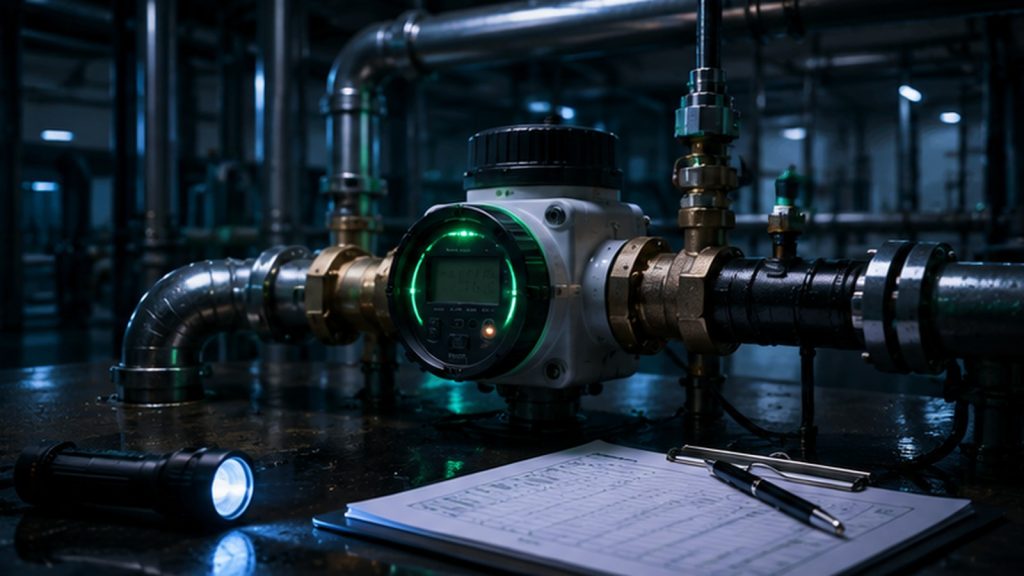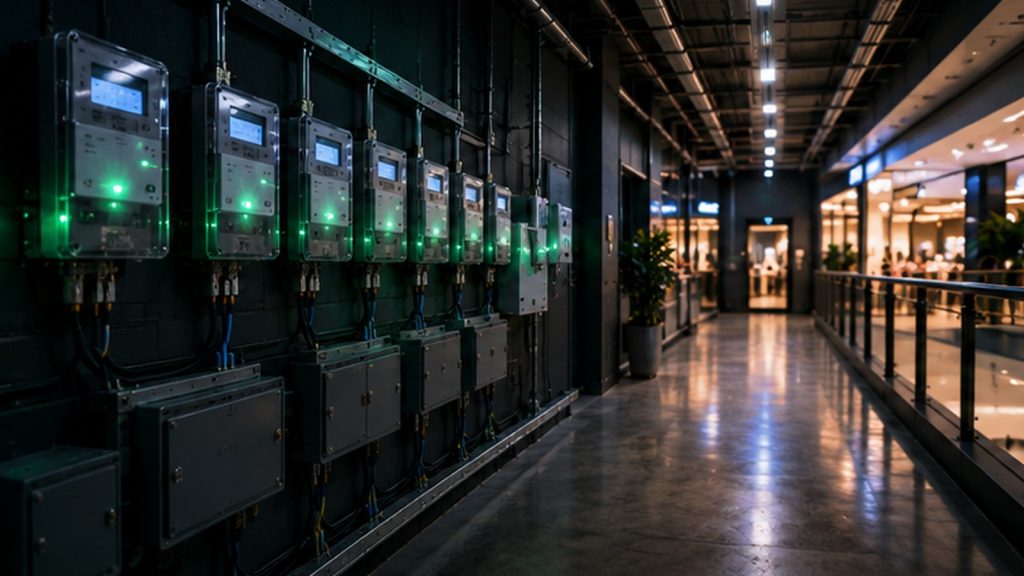
Many businesses only look closely at electricity data when a bill increases or equipment starts tripping. The terms on commercial accounts and meter reports can then become confusing. kWh, kW, kVA and power factor sound technical, but they describe practical things: how much energy is used, how much load is being drawn and how efficiently electrical capacity is being used.
This guide keeps kWh, kVA and power factor explained in plain English for business owners, facility managers and commercial landlords. It is not a substitute for an electrical assessment, but it can help you ask better questions before assuming that equipment is faulty or that a bill is wrong.
RB Electrical works with electrical contracting, smart electricity metering and utility monitoring across South Africa and Namibia. We often see that better data helps businesses separate normal operating patterns from issues that need technical attention.
The basic terms in plain English
kWh: energy used over time
kWh stands for kilowatt-hour. It is the amount of electrical energy used over a period. If a 1 kW load runs for one hour, it uses 1 kWh. If a 10 kW load runs for one hour, it uses 10 kWh.
For most businesses, kWh is the easiest figure to understand because it links to activity. More trading hours, more refrigeration, more pumping, more lighting or more production generally means more kWh.
kW: real power at a point in time
kW stands for kilowatt. It describes the real power being used at a moment or averaged over a short period. If several large loads operate at the same time, the kW demand rises.
kVA: apparent power or capacity demand
kVA stands for kilovolt-ampere. It relates to the total electrical capacity needed to supply a load, including the effect of power factor. On some commercial supplies, kVA can affect demand charges or supply capacity considerations.
Power factor: how effectively power is used
Power factor is a ratio that shows how effectively electrical power is being converted into useful work. A lower power factor means the site may need more apparent power to deliver the same useful output. Motors, pumps, refrigeration and some older or poorly managed equipment can affect power factor.
A simple business example
Consider a small commercial property with a supermarket tenant, a few offices and common-area lighting. During the day, lighting, tills, computers and air-conditioning run steadily. The supermarket refrigeration cycles on and off. In the afternoon, air-conditioning load rises. If several refrigeration compressors and air-conditioning units start around the same time, the demand peak may be higher than the average daily load suggests.
The monthly kWh figure tells the landlord how much energy was used over the billing period. The kW or kVA demand data shows the higher-load periods. Power factor data helps indicate whether certain types of equipment are drawing electrical capacity less efficiently.
None of these figures alone proves there is a fault. Together, they show a pattern that can be monitored, discussed and investigated if needed.
Why motors, refrigeration, pumps and air-conditioning matter
Commercial properties often have inductive loads. These include motors, compressors, pumps and some air-conditioning systems. They can influence demand and power factor, especially when poorly maintained, heavily loaded or switched in a way that creates peaks.
Examples include:
- Refrigeration banks in retail food stores.
- Borehole, booster or irrigation pumps.
- Workshop machinery and extraction fans.
- HVAC plant in offices, schools and retail centres.
- Cold rooms and freezers.
Load management also matters. If high-load equipment starts at the same time every morning, the site may record a demand peak even if total monthly kWh is not unusual. A smart meter can help show when those peaks occur.
When kVA may affect commercial billing
Electricity tariffs vary, and billing structures should be checked against the relevant account or supply agreement. In some commercial contexts, demand or capacity charges may be linked to kVA or maximum demand. This means a site can be affected not only by how much energy it uses, but by how high its demand rises during the billing period.
For landlords and businesses, this is why meter data matters. Two sites with similar monthly kWh can have different demand profiles. One may use energy steadily, while another may create short, high peaks. Those peaks can influence costs where the tariff structure includes demand components.
For more background, see our existing article on kVA and our guide to the true cost of energy.
What data a smart meter can provide
Smart electricity meters can provide more frequent and useful data than a single month-end reading. Depending on the meter and reporting platform, data may include:
- kWh consumption by period.
- Demand trends and peak periods.
- Load profiles across the day or week.
- Tenant-level or area-level consumption.
- Power factor visibility where supported.
- Alerts for unusual usage or abnormal patterns.
Through utility metering and RBE Utilities monitoring powered by the MY.POWER platform, RB Electrical helps property managers and businesses work with practical usage data. The value is in turning readings into decisions: what changed, when it changed and where to investigate.
Practical actions before assuming equipment is faulty
Before replacing equipment or disputing an account, gather evidence. A structured check can save time and avoid unnecessary call-outs.
- Compare the billing period with the meter reading dates.
- Check whether operating hours changed during the month.
- Identify new equipment, tenant changes or seasonal loads.
- Compare weekday, weekend and after-hours consumption.
- Look for demand peaks and what was operating at those times.
- Check whether pumps, compressors or air-conditioning units are cycling unusually.
- Review maintenance records for high-load equipment.
- Confirm whether the issue is site-wide or linked to one tenant or area.
This process does not diagnose the electrical cause. It helps decide whether the next step is monitoring, operational adjustment or a technical inspection.
Monitoring, diagnosing and correction work are different
It is important to separate three activities.
Monitoring records what is happening. Smart meters and reporting platforms show consumption, demand and patterns.
Diagnosing interprets those patterns. A facilities manager, metering provider or electrical contractor may review when peaks occur, which loads are involved and whether the data suggests abnormal behaviour.
Correction work changes the electrical installation or equipment. This may include repairs, load balancing, controls, power factor correction equipment or maintenance on motors and pumps. Correction work should be assessed and performed by qualified people with proper site information.
Warning signs that need closer review
- Demand peaks that occur at the same time every day without an obvious operational reason.
- A sudden increase in kWh after a tenant or equipment change.
- Poor power factor readings where supported by metering data.
- Frequent breaker trips linked to high-load equipment.
- Pumps or compressors running longer than expected.
- After-hours electricity use that does not match security, lighting or refrigeration requirements.
When to call a professional
Call a professional when there are repeated trips, overheating smells, visible damage, unexplained demand spikes, suspected wiring issues or safety concerns. Monitoring can point to the area of concern, but electrical testing and correction work should not be guessed.
Using the numbers to make better decisions
Once kWh, kVA and power factor are understood, electricity data becomes more useful. A landlord can discuss tenant usage with evidence. A business owner can see whether a cost increase matches longer operating hours. A facilities manager can identify loads that need inspection.
RB Electrical can assist with smart metering, utility monitoring and electrical contracting support for commercial properties, farms, schools, retail sites and multi-tenant buildings. Visit our contact page if you need help reviewing your electricity data or planning metering for a site.